Sant Pau Recinte Modernista
- Address
- Carrer de Sant Antoni Maria Claret, 167, 08025 Barcelona
- Metro
- Sant Pau | Dos de Maig (L4)
- Price
- Self-guided visit €18, or €17 after 14:00 (2026)
- Hours
- Daily 9:30–18:30 (Apr–Oct), 9:30–17:00 (Nov–Mar); closed 25 Dec
- Links
- Official website · Open map
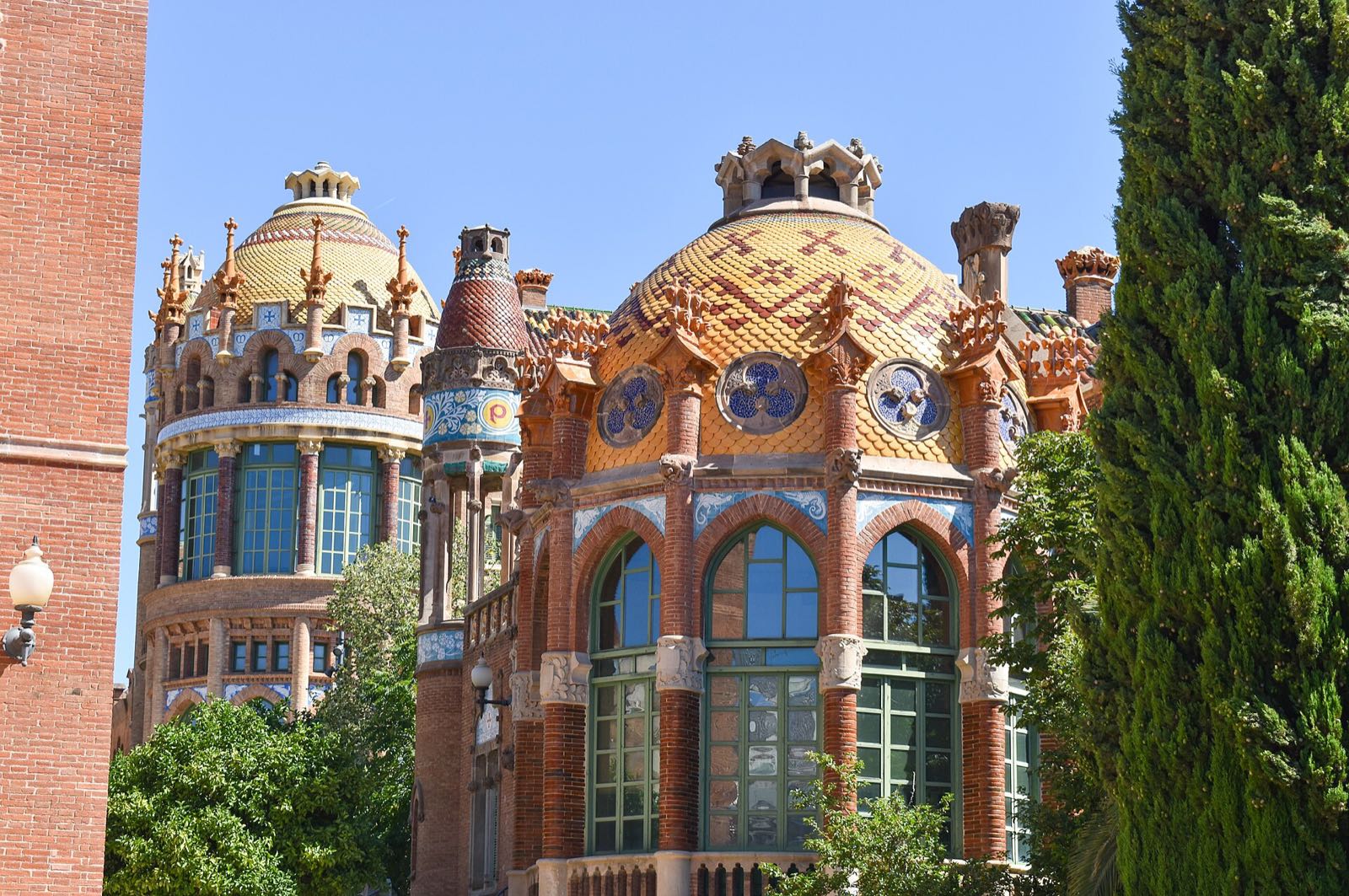
The Hospital de la Santa Creu i Sant Pau was built between 1902 and 1930 to replace the city's medieval hospital in the Raval. Its architect, Lluís Domènech i Montaner, believed that light, air and beauty helped people recover, so instead of one large block he designed a campus of separate pavilions set in gardens and linked by underground tunnels. It worked as a hospital until 2009, when the wards moved to a new building behind. After a long restoration the historic site opened to visitors in 2014.
It is the largest Modernista complex anywhere, and it shares its UNESCO listing with Domènech i Montaner's other great work, the Palau de la Música. If Gaudí is the genius of the movement, this is the place that shows how good everyone else was.
You enter through the Administration Pavilion, the showpiece. Climb the main staircase to the upper halls, where the vaulted ceilings are covered in pink and gold tile, mosaics tell the hospital's history and stained glass throws colour across the floor. From the front windows you look straight down Avinguda de Gaudí to the Sagrada Família. The architect set the whole complex at 45 degrees to the Eixample grid, so the pavilions catch more sun.
Outside, the garden is lined with pavilions that each have a different ceramic dome, sculpted saints and patterned brickwork. Sant Rafael has been fitted out as a ward from the 1920s, with rows of iron beds under a tiled vault. Another pavilion holds the exhibition on the building and its architect. You can also walk a section of the white-tiled service tunnels that once carried patients and supplies between buildings.
Tickets for the self-guided visit cost €18 in 2026, or €17 if you enter after 14:00, with a reduced rate of €12.60 for under-30s and over-65s; prices go up by about a euro from January 2027. An audio guide is €4. Guided tours cost €21 and run at weekends, with an English tour on Saturdays at 10:30. Entry is free on 23 April, 24 September and the Night of the Museums in May, when queues are long.
Booking ahead is sensible in high season but rarely essential. Allow 90 minutes. Morning light is best on the main façade, and late afternoon is quietest. Photographers should bring a wide lens for the halls.
The obvious pairing is the Sagrada Família: the pedestrian Avinguda de Gaudí links the two in ten minutes, with plenty of terraces on the way. Fit walkers can continue uphill afterwards to the Bunkers del Carmel for the view.
Why go
- Architecture. Domes, mosaics and stained glass on the scale of a small town.
- Fewer people. A World Heritage site with space to breathe, even in summer.
- Fair price. About half the cost of the major Gaudí houses.
- Easy pairing. Ten minutes on foot from the Sagrada Família.
 Keep in mind
- Not every pavilion is open. Several buildings house offices and can only be seen from outside.
- Events. Rooms are occasionally closed for private functions, so check the website on the day.
- Winter hours. From November to March the site closes at 17:00.