 amigo
Barcelona souvenirs: what to buy, where to buy it and what to skip
Most of what is sold as a Barcelona souvenir has nothing to do with Barcelona. Flamenco dolls, Mexican sombreros and plastic bulls belong to other places entirely, and the mosaic lizards stacked outside every shop on La Rambla are imported by the container.
The good stuff exists, and most of it is within a fifteen-minute walk in the old town. Here is what is worth the luggage space, with shops we have checked are trading.
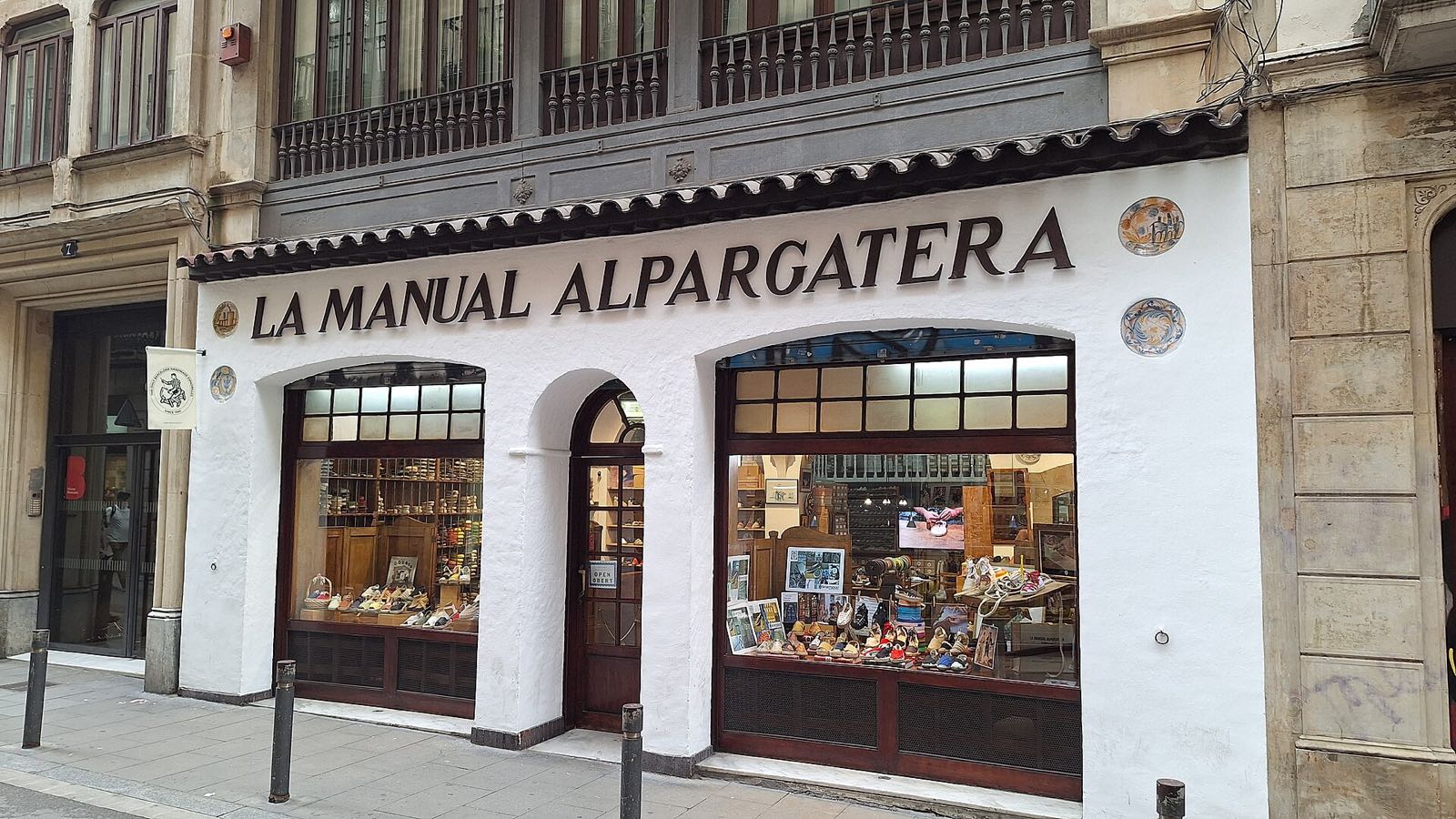
Espadrilles from La Manual Alpargatera
Espadrilles, espardenyes in Catalan, are the rope-soled canvas shoes worn for the sardana and by half the city in summer. La Manual Alpargatera at Carrer d'Avinyó 7 in the Gothic Quarter both makes and sells them, and is the shop locals send people to.
The walls are stacked to the ceiling with every colour and shape, from flat slip-ons to ribbon-tied wedges. Staff fit you properly, and the fit matters: they should feel tight at first because the canvas gives. Queues form in season, so go at opening time. The shop closes on Sundays, and published hours differ on whether it shuts for a midday break, so check before you walk over.
Turrón and other sweets
Turrón, torró in Catalan, is the almond nougat eaten at Christmas and sold all year. The hard Alicante style is whole almonds set in honey; the soft Jijona style is ground to a paste. It travels well and keeps for months.
Torrons Vicens, a house from Agramunt in inland Catalonia, has several shops in the centre, including one at Carrer de Petritxol 15, and sells both the classics and dozens of modern flavours. Planelles Donat, which dates from 1850, has shops at Avinguda del Portal de l'Àngel 25 and 27 and is the traditionalist's choice. In summer the same counters sell horchata and ice cream.
For nuts, dried fruit and coffee, Casa Gispert at Carrer dels Sombrerers 23 in El Born has been roasting since 1851 and still uses its original wood-fired oven. A bag of warm almonds costs little and makes a better gift than anything with a logo on it.
Vermouth, cava and things in tins
Catalan vermouth is sweet, red, herbal and cheap. Much of it comes from Reus, south of Barcelona. Look for Yzaguirre, Miró and Casa Mariol in any decent bodega or supermarket; bottles cost a fraction of what a cocktail does. Pack it in hold luggage.
Cava from the Penedès is the other obvious bottle. For food, tinned seafood is a local obsession: cockles, mussels in escabeche and anchovies from L'Escala are what Catalans actually serve with vermouth. Olive oil from Les Garrigues or Siurana and a jar of romesco sauce round out the bag. La Boqueria and Santa Caterina market both have stalls selling vacuum-packed ham and cheese, although prices at Santa Caterina tend to be kinder.
Ceramics
Spain has strong regional pottery traditions and Barcelona is a convenient place to see them side by side. Art Escudellers at Carrer dels Escudellers 23 is a large showroom in the Gothic Quarter with work from across the country, labelled by region and maker. It ranges from a few euros for a small dish to serious money for signed pieces, and they will pack for travel.
Look for the green-and-yellow glazed kitchenware of La Bisbal d'Empordà, the Catalan pottery town, and for a porró, the glass or ceramic wine pitcher with a spout that you drink from at arm's length. Small hand-painted tiles are easy to carry. Check the base: anything made here will say so.
Barça gear from official stores
Buy football shirts only from official Barça Stores. The street-seller versions are counterfeit, fall apart in the wash and can be confiscated. The club lists city-centre stores at La Rambla 124 (Barça Store Canaletes, the flagship, on three floors) and Passeig de Gràcia 15, plus the largest shop at the stadium, which you can combine with a visit to Camp Nou.
Official shirts are expensive, and name-and-number printing costs extra. Scarves, training tops and children's kits are cheaper ways to bring the colours home.
The caganer
The caganer is a small figure of a peasant in a red Catalan cap, trousers down, squatting. He has been hidden in Catalan nativity scenes for a couple of centuries and is considered good luck: he fertilises the earth. Children hunt for him behind the stable.
Today there are caganers of footballers, politicians, pop stars and royals, with new ones released every autumn. The main maker, Caganer.com, opened a dedicated shop at Carrer dels Banys Nous 4 in the Gothic Quarter in 2021. From late November the Fira de Santa Llúcia Christmas market outside the Cathedral sells them by the hundred, along with the tió, a smiling log that children beat with sticks until it produces presents. Nobody you give one to will have another.
What to skip
A short list of things to leave on the shelf.
- Sombreros, flamenco dresses and bull figurines. None of it is Catalan.
- Fake shirts, bags and sunglasses from blankets on the pavement.
- Mass-produced mosaic lizards and Gaudí fridge magnets from La Rambla. If you want Gaudí design, the museum shops at Casa Batlló and La Pedrera are better made.
- Saffron sold loose at tourist stalls, which is often poor quality or not saffron.
- Boxed paella kits. Buy a bag of bomba rice and a tin of pimentón instead.
Practical notes
Traditional shops generally open Monday to Saturday and many close on Sunday; some smaller ones still shut for a couple of hours after lunch. Visitors who live outside the EU can reclaim VAT on goods they take home, and Spain sets no minimum purchase: ask the shop for a tax-free form and validate it at the airport before check-in.
For bigger-ticket shopping, the luxury houses line Passeig de Gràcia, while the independent boutiques are in El Born and Gràcia.